
This story is part of the WHYY News Climate Desk, bringing you news and solutions for our changing region.
From the Poconos to the Jersey Shore to the mouth of the Delaware Bay, what do you want to know about climate change? What would you like us to cover? Get in touch.
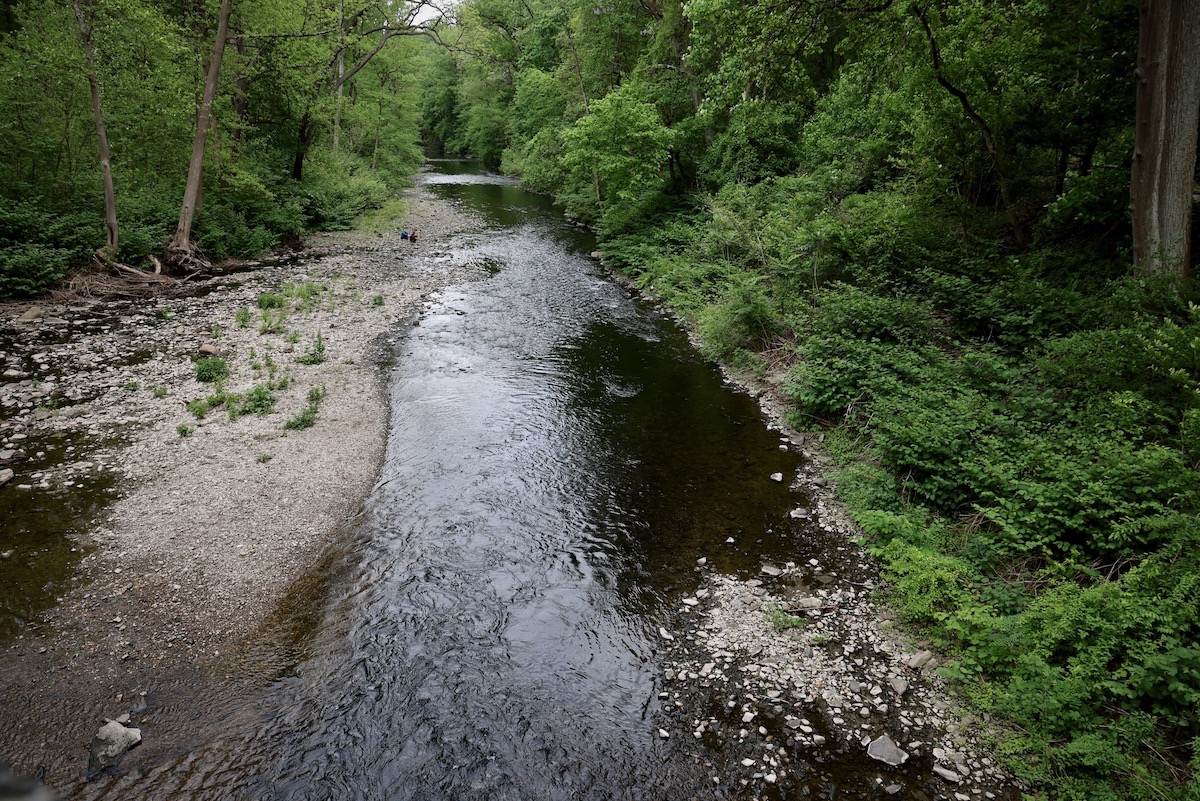
Environmental regulators in Pennsylvania are warning anglers to avoid eating fish from the Wissahickon Creek.
State agencies issued the “Do Not Eat” advisory after detecting high levels of toxic PFAS in fish tissues from the watershed. The advisory applies to all fish species in the creek and its tributaries in Montgomery and Philadelphia counties.
In response, the Pennsylvania Fish and Boat Commission canceled a scheduled Oct. 15 trout stocking in the creek. Despite the “Do Not Eat” advisory, the waterway remains open for fishing.
“The anglers are certainly disappointed when we cancel a trout stocking for any reason. It’s difficult to find trout, stocked trout fishing opportunities, around the city of Philadelphia,” said Mike Parker, communications director for the Pennsylvania Fish and Boat Commission.
“But we’re taking a conservative approach now by canceling the stocking in hopes that between now and spring we can find an alternative way to manage that stream and possibly stock trout again.”
PFAS chemicals include hundreds of separate compounds that are widely used in consumer products such as nonstick cookware and waterproof clothing, as well as in firefighting foam. The so-called “forever chemicals” have contaminated waterways and drinking water supplies throughout the Philadelphia region.
The chemicals have been linked to serious health problems, including some cancers, thyroid disease and developmental delays in children.
The health risks associated with PFAS, which can stay in the environment and the human body for years, have sparked numerous lawsuits against chemical manufacturers like DuPont.
Fish can bioaccumulate PFAS easily by eating or swimming in contaminated water.
“These compounds don’t really break down. So, the fish doesn’t excrete them. They don’t degrade within the organism,” said Cheryl Murphy, director for the Center for PFAS Research at Michigan State University.
“As a result, when they get into the fish, they’ll bind to proteins and stay within the membranes of cells, and it’ll take a long time for the animal to clear it. If it keeps getting exposed to it, it’ll just keep building up and building up long past the ability for it to clear.”
The Pennsylvania Department of Environmental Protection began sampling fish tissue for PFAS in 2021.


