
The blue-screen and curved LED soundstages Orbital Studios built this year at Television City are a hive of virtual production activity. A movie starring Jessica Chastain was shooting on the Fairfax District lot last month, while “Dancing with the Stars” was in production.
“We’ve been as busy as ever,” Orbital Chief Executive A.J. Wedding told the Business Journal.
But the lot’s owner is in a doom spiral.
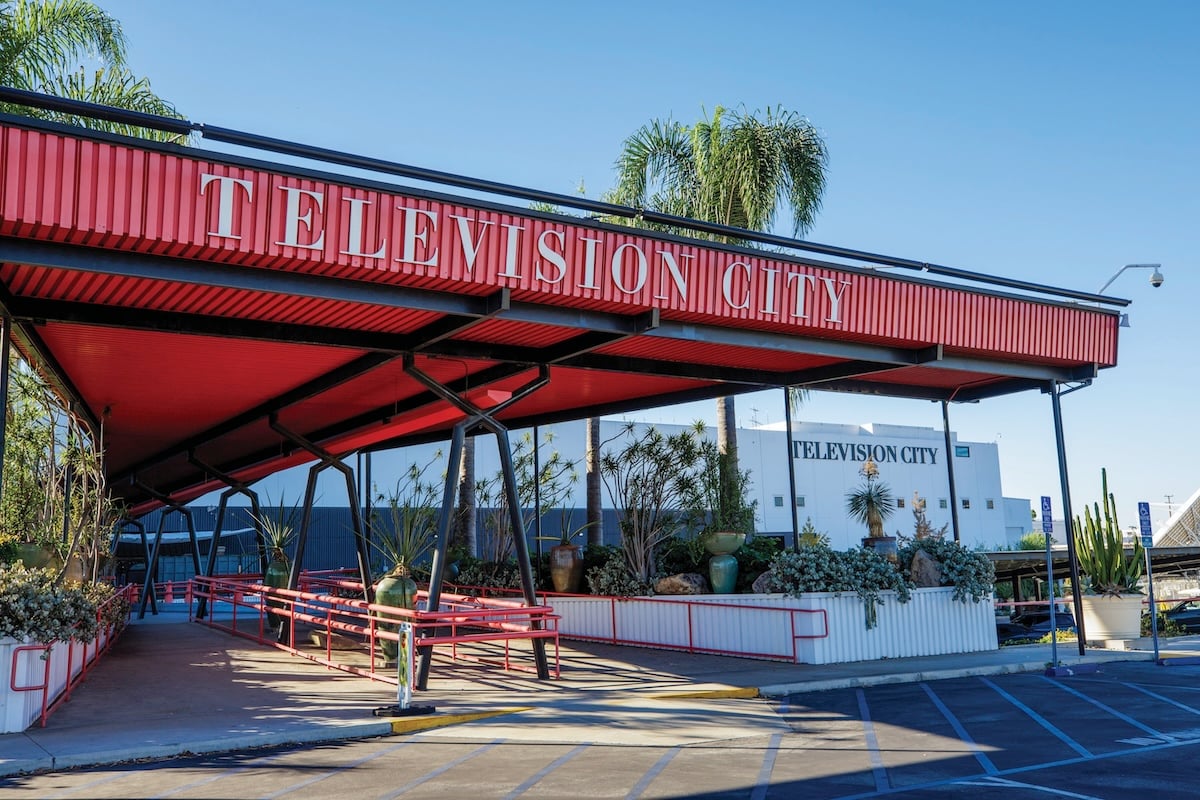
Deutsche Bank recorded a notice of default in June against the 25-acre property at 7800 Beverly Blvd., claiming landlord Hackman Capital Partners owed $357.5 million on its mortgage. Lenders tapped CBRE Group Inc. to sell the note this summer, according to a source with knowledge of the deal.
Television City is one of five Hackman studio properties where lenders have filed notices of default or moved to foreclose since January, according to property records and court filings. The loans on those properties total more than $2.1 billion: $1.1 billion on Radford Studio Center in Studio City, $350 million on Television City, $248 million on MBS Media Campus in Manhattan Beach, $100 million on the former Sony Pictures Animation campus in Culver City and $340 million on Kaufman Astoria Studios in Queens, New York.
The troubled Culver City-based real estate firm, together with longtime partner Affinius Capital – then known as Square Mile Capital Management – spent three years beginning in 2018 buying up some of the most storied soundstages in Hollywood and New York, financed largely with loans from Deutsche Bank and Goldman Sachs.
The bet was that the streaming wars would keep demand for production space high for years. Instead, a production slump after the 2020 pandemic lockdowns, the 2023 writers’ and actors’ strikes and the flight of filming to cheaper locations emptied stages across Los Angeles, leaving Hackman unable to pay its debts and its lenders searching for a way out.
Deutsche Bank’s lending left it with direct exposure of up to $1.4 billion against Hack- man’s studio portfolio, according to the Business Journal’s analysis. A source familiar with the matter said that amount has been “substantively reduced” and that the value of the bank’s remaining Hackman loan portfolio is in line with the properties’ current worth.
Goldman, for its part, is directly exposed to up to $800 million against Hackman’s studio portfolio after leading $1.2 billion in loans.
Spokespeople for Deutsche Bank and Goldman declined to comment.
Now, Hackman faces a difficult path forward. Spokespeople for Hackman and Affinius declined to comment on their future relationship or answer specific questions from the Business Journal.
However, a spokesperson for Hackman Capital said the production downturn and high interest rates placed “significant pressure” on the industry and limited its revenue and refinancing options.
“Hackman Capital is navigating those challenges with institutional discipline and a strategic asset-specific approach to capital allocation,” the spokesperson said in a statement. “We believe in the industry, while recognizing that recovery may take time and vary by market.”
Recently, Chief Executive Michael Hackman put it more candidly.
“We have a couple deals that we just made mistakes on,” Hackman told industry leaders from the stage of a Bisnow conference at The Lot at Formosa in June. “We’re going to lose a lot of money on those properties, but that happens. We’ve accepted it, and now we’re moving on.”
The Hayden Tract
Studios weren’t part of Hackman Capital’s original business plan.
The firm was founded in 1986 by Michael Hackman, a mild-mannered Midwesterner with a horseshoe hairline who still helms the company today at 69. Hackman headed west after graduating from The Ohio State University and spent his twenties as an industrial broker for Ed Roski’s Majestic Realty Co. and CBRE before launching his own firm at 29.
Hackman’s early ventures centered on warehouses and factories, including converting former aircraft plants and other long-forsaken industrial properties into what brokers now refer to as creative office space.
In the early 2000s, the firm narrowed its focus to Southern California and moved into urban infill and adaptive reuse targeting film, television and tech companies flourishing in converted industrial buildings on the Westside.
That strategy brought Hackman to Culver City’s Hayden Tract, a once-blighted warehouse district that architect Eric Owen Moss and developers Frederick and Laurie Samitaur Smith began remaking into a creative office hub in the mid-1980s. Starting in 2007, Hackman bought six warehouses there and converted them into offices, including 8600 Hayden Place and 8550 Higuera St., which later became the headquarters of audio brand Beats by Dre, and 3644 Eastham Drive.
Hackman sold all three buildings to downtown-based IDS Real Estate Group in 2015 for $108 million.
“We were just at the right place at the right time with a good strategy,” Hackman told Commercial Observer in 2018. “If you buy in great locations, quality assets, you do not overleverage, you have a long-term view, then you can defend your position.”
Culver Studios: the template
Hackman became a studio landlord in March 2014, when the firm paid $85 million to acquire Culver Studios out of bankruptcy from Lehman Brothers.
The 14-acre lot at 9300 Washington Blvd. was built by silent film pioneer Thomas Ince more than a century ago, and classics including “Citizen Kane” and “Gone with the Wind” were shot there.
The deal marked the start of Hackman’s relationship with German investment bank Deutsche Bank, which provided a $50 million loan for the acquisition, backed by guaranties from Hackman Capital Partners and Michael Hackman, according to the deed of trust.
The bet paid off in July 2017, when Amazon Studios leased 31,400 square feet across nine buildings on the lot, according to a lease memorandum filed with the county. That initial foothold paved the way for an overhaul that doubled Culver Studios’ size, adding five office and studio buildings and two parking structures to accommodate Amazon’s burgeoning streaming business. Deutsche Bank provided $590 million worth of construction financing in 2018 and added $30.2 million the following year, according to a deed of trust and loan amendment. Hackman Capital Partners and Michael Hackman again signed guaranties, including one promising to complete the project and another covering interest and carrying costs, the deed of trust shows.
“We understood that we needed to modernize this facility in order for it to be competitive for the next 100 years,” Hackman told Commercial Observer in 2018. “Being able to land Amazon Studios validated the hard work that the city and the community put into our redesign.”
The tech giant’s streaming subsidiary now occupies 530,000 square feet on the lot and is the sole tenant at the property, according to a 2024 bond prospectus. The debt’s maturity is unclear, but no default has been recorded against the property, according to county records.
Culver Studios became the model for what came next: buy a storied but aging lot, modernize it and sign a big-name tenant.
Hackman set out to replicate that strategy on a grand scale.
The buying spree, 2018–2021
By early 2021, Michael Hackman told Bloomberg he valued his entertainment real estate at $4 billion and aimed to double it to $8 billion by the end of the following year.
“We’re not looking to mine the gold,” Hackman said. But in a hypothetical gold rush, he added, “we’re happy supplying the screens and the pans.”
Next, he set his sights on Television City, the CBS complex that opened in 1952 and was once home to “All in the Family” and “The Price Is Right.” CBS agreed in December 2018 to sell the lot and its operations for $750 million, with a lease-back and guaranteed cash flow for five years totaling about $122 million, according to the network’s SEC filings.
That commitment helped push up the price, a source with knowledge of the deal told the Business Journal. The Fairfax District property ultimately traded for $405 million, or about $519 per square foot, property records show.
Deutsche Bank lent $400 million against Television City, and Hackman Capital Partners and Michael Hackman again signed a guaranty, according to the deed of trust.
Months later, in July 2019, Hackman and Affinius bought production services company MBS Group from Washington, D.C.-based private equity firm The Carlyle Group, along with its 15-stage studio lot, Manhattan Beach Studios, in a deal totaling $650 million.
The 22-acre campus at 1600 Rosecrans Ave. accounted for $340 million, or about $580 per square foot, which Deutsche Bank financed with a $247 million loan, according to property records. MBS Group, which rents lighting, grip and other production equipment, came along with the lot and continues to operate it.
The partners crossed the country in September 2020 to buy Silvercup Studios in Long Island City, the longtime home of “The Sopranos” and “Sex and the City,” from the Suna family for $482 million, or about $947 per square foot, according to deeds filed in New York City. Leon Black’s Apollo Global Management provided a $223 million loan while Deutsche Bank kicked in $100 million worth of financing, local property records show.
In January 2021, Hackman and Affinius paid $165 million, or about $906 per square foot, for the then-Sony Pictures Animation campus at 9050 Washington Blvd. in Culver City, across the street from Culver Studios, financed with a $100 million loan from Goldman Sachs, according to property records.
“The investment fundamentals have never been stronger,” Affinius co-founder and chief executive Craig Solomon said at the time.
That same month, Hackman announced a venture with Raleigh Enterprises at Raleigh Studios in Hollywood. And 10 months later, the partners bought Kaufman Astoria Studios in Queens – the original home of Paramount Pictures – by acquiring the joint venture that owned it. News reports at the time valued the deal at a staggering $600 million, or roughly $1,200 per square foot for the 11 soundstages. Hackman received a $340 million loan from Deutsche Bank as lead lender alongside Goldman and affiliates of Florida-based Starwood Capital Group, the city’s property records show.
And Hackman expanded overseas as well.
With Affinius, it bought Ardmore Studios in Dublin, Troy Studios in Limerick, Ireland, and Wardpark Studios in Scotland in 2021, and Vancouver Film Studios in 2023. In east London, the firm leased sites to build and convert into stages. In 2022, Hackman closed its HCP Studio Fund with $1.6 billion in committed equity, including co-investments.
The biggest deal came at the end of 2021. ViacomCBS, now Paramount Skydance, agreed to sell the 55-acre Radford Studio Center in Studio City, where “Seinfeld” and “Gilligan’s Island” were filmed, for about $1.85 billion, nearly $40 million above the appraisal price recorded before the deal closed, according to Morningstar Credit. Goldman, Morgan Stanley and Wells Fargo provided a $1.1 billion loan. The lenders only managed to syndicate $395 million of that to commercial mortgage-backed securities investors before cracks in Hackman’s empire began to show, Morningstar data shows.
The same year, Hackman unveiled a $1.25 billion expansion plan for Television City, dubbed TVC 2050, with more than a dozen new soundstages and an office building. The build-out was meant to meet “meteoric demand” for studio space as streaming platforms chased a steady flow of new content, Hackman told Deadline that year. He also conceded that the imbalance between supply and demand that his firm was capitalizing on would eventually “come into balance.”
The studio real estate market at that time had turned into a contest among landlords and new investors flush with cheap money, according to Shawn Papazian, a studio developer and producer who oversaw entitlements at the Culver Studios lot.
“It was just a race to see who can build the biggest, most expensive studio in Los Angeles and charge the most for it because there was an appetite to pay for that amount of money to occupy,” Papazian said.
New balance of powers
The balance changed sooner than most studio owners expected.
Soundstage occupancy in Los Angeles held at 90% or higher through 2022, then fell precipitously over the following three years to reach 62% in the first half of 2025, according to FilmLA, a nonprofit that serves as the official film office for the city and county of Los Angeles.
In early 2022, Netflix reported its first loss of subscribers in more than a decade, shedding 200,000 in the first quarter. The writers’ and actors’ strikes the following year halted local scripted production for months, and legacy studios and streaming services pulled back on spending under pressure from Wall Street to boost profits. Meanwhile, tax credits drew productions to rival film hubs such as New York and Atlanta.
Industry employment in L.A. County peaked at 161,100 jobs in February 2022, as the streaming boom crested. By September 2026, it had fallen to 93,000, county data shows.
“This was an avalanche like we really haven’t seen before,” said Matt Yaldezian, associate director of professional programs at UCLA’s School of Theater, Film and Television.
Scripted television, the bread and butter of big soundstage operators, took the hardest hit.
Shoot days for scripted TV on the soundstages FilmLA tracks fell 23% between 2023 and 2024, the nonprofit reported in March.
The slump exposed a divide between independent studio landlords and the media companies that own their lots. While The Walt Disney Co. and NBCUniversal could absorb higher vacancy at their own lots in Burbank and Universal City, landlords running on borrowed money felt the hit fast. And streaming giants that joined the fray a decade earlier have since gained enough scale to become their own landlords.
Netflix bought the 12-soundstage ABQ Studios in Albuquerque in 2018 and in December closed a $55 million purchase of 292 acres at the former Fort Monmouth Army base in New. Jersey, where it’s building a $1 billion campus with 12 soundstages. And Amazon bought Bray Film Studios outside London in 2024 and Netflix is now poised to own Radford.
“Media giants like Amazon Prime and Netflix are doing productions in their own space,” said Chris Meyer, an analyst at Morningstar. “Hackman is essentially a landlord.”
Papazian saw the new reality from the ground. Indie stage operators that had been pushing studios into longer leases while raising rents and equipment costs were now competing for a shrinking pool of shows. Keeping stages filled meant dropping rents and swallowing losses, he said.
“You’ve got a low amount of productions with a tremendous amount of inventory,” Papazian said. “Everyone’s fighting for the same productions and giving massive discounts.”
Having lost the upper hand, landlords like Hackman were coming up short.
“Before you know it, they couldn’t service the debt,” Papazian said.
State lawmakers responded by expanding California’s annual film and TV tax credit to $750 million in 2025, luring some producers back. The industry’s spending in the state rose 17% year-over-year in the third quarter of 2026, according to a report by ProdPro, which tracks film and TV production. Meanwhile, spending in New York nearly doubled over the same period.
Kevin Shannon, co-head of capital markets for New York-based brokerage Newmark’s Los Angeles office, said the strikes taught producers they could leave town.
“A lot of production was forced to go out of the city, and the producers figured out that it’d be just fine, and it’s cheaper to do that,” Shannon said. “Based on results, we have too many studios, and there are ones that are going to survive, and others are going to be repurposed.”
Canary in the coal mine
Radford was the first of Hackman’s lots to show the strain.
The 22-stage Studio City lot generated $15.6 million in net operating income in 2025, a far cry from the $60 million projected when the loan was made, according to Morningstar Credit. By then, the property’s income covered just 19% of its debt payments.
Goldman’s $1.1 billion loan first came due in January 2024. Lenders extended it at least twice to June 2025.
At Television City, Deutsche Bank quietly reworked its loan. The bank signed three modifications between January and March 2023 and twice more in February 2024, when it cut the maximum principal from $400 million to $350 million, property records show.
Meanwhile, Hackman fell behind on payments to public relations firm 10th Street Strategies, which it had hired to advise on Radford, according to a lawsuit the firm filed in April 2026. The consultants allege that Zach Sokoloff, a senior vice president overseeing Radford and Television City for Hackman, repeatedly promised to catch up on monthly invoices. Between June and December 2025, Sokoloff told 10th Street to “sit tight” because his firm was getting “good news” from lenders, the suit claims.
The good news never came. MBS Group, for its part, began recapitalization talks in August 2025, partly because of conflicts over how Hackman paid it for services across the portfolio, the Financial Times reported. Michael Hackman stepped down from the studio servicer’s board amid the talks. And in August, Hackman ceded control of MBS Group to private equity giant BlackRock’s HPS Investment Partners and downtown-based distressed debt firm Oaktree Capital.
In December, Hackman informed its HCP Studio Fund investors it had “made the difficult decision” to stop trying to restructure the Radford loan, and blamed MBS for demanding changes to the lot’s equipment rental agreement, Bloomberg reported.
“While disappointing, we do not see a realistic alternative,” the fund’s sponsors wrote in a letter to investors.
Hackman’s reliance on single big tenants and short-term production deals also left it exposed. Sony Pictures Animation decamped to Mid-Wilshire in 2024, leaving the Culver City campus vacant.
And at Television City, leasing data shows Hackman stopped signing long production contracts as it planned its redevelopment.
“They started not taking on new contracts that were lengthy because they wanted to make sure they had time to hold it down and tear it up,” Wedding, of Orbital Studios, said.

Where things stand
Hackman’s lenders are now working out their losses, property by property. In most cases they have chosen to foreclose or sell the debt rather than take the keys back quietly.
In January, Hackman told investors it would return Radford to the Goldman-led lender group, and the two sides discussed a deed in lieu of foreclosure, Bloomberg reported. Instead, the lenders recorded a notice of trustee’s sale in October claiming nearly $1.3 billion and scheduled a public foreclosure auction on Nov. 24.
Netflix has been under contract since June to buy Radford for close to $400 million, the Los Angeles Times previously reported. A source with knowledge of the deal told the Business Journal that rather than buying the property’s debt from the lenders, Netflix asked Goldman to foreclose, pay the city’s Measure ULA transfer tax, and deliver the lot to the streamer.
A spokesperson for Netflix said the Radford deal is progressing.
And in its Oct. 20 letter to shareholders, the streaming giant revealed it expects to close before the end of the year. It lowered its 2026 free cash flow forecast from $12.5 billion to $12 billion “due primarily to the expected closing of a real estate transaction” in the fourth quarter, the letter said.
A source close to Netflix told the Business Journal the company will keep its current Hollywood leases after it acquires Radford. “The company isn’t expecting anything to change in the near-term,” the source said.
Bondholders who bought the $395 million slice of the Radford loan could lose about $253 million, Meyer estimated.
In Manhattan Beach, lenders opted to sell the debt rather than the campus. Cushman & Wakefield is marketing the $248 million loan and pitching the campus as a potential site for defense technology companies, according to marketing materials reviewed by the Business Journal. The lenders chose a buyer from three bidders, at or above the loan balance, and the sale is expected to close before Thanksgiving, according to a source with knowledge of the deal.
At Television City, Deutsche Bank is likely to foreclose, a source with knowledge of the deal said. But the status of those proceedings is unclear, and the $357.5 million default notice issued in June is no longer active, property records show.
Meanwhile, the lot stays busy. Orbital’s productions often want to bring cheaper equipment from outside vendors, but MBS Group still holds a contract to provide lighting and grip at Television City, which makes the rentals a “constant conversation,” Wedding said.
“They would have deals where you have to use MBS for equipment, and you have to pay a certain minimum,” Wedding said. “That’s just not where we are anymore. People don’t want to put up with that, and they’re still trying to push that model.”
Buyers show interest
Would-be buyers are circling.
Papazian, a partner at New York-based studio developer Knickpoint Ventures, said he is “very interested” in Television City and would see developer Rick Caruso, whose company sued in 2025 to block Hackman’s redevelopment plan for the site next door to The Grove, as an ideal partner for a retail build-out.
“He has the touch of gold,” Papazian said, adding that he’s interested in renting out soundstages for “immersive experiences” like digital art exhibits. A spokesperson for Caruso declined to comment.
In Culver City, New York-based investment firm Fortress Investment Group, which bought the Sony campus loan from Goldman in 2023, took the property at an August foreclosure auction with a $71.3 million credit bid. Culver City has until Feb. 28 to exercise a $103 million option to buy the campus, which it would demolish, the Business Journal reported in October.
In Queens, a court-appointed receiver now runs Kaufman Astoria Studios and has hired Atlanta-based Shadowbox Studios to manage the lot.
A few of Hackman’s properties are performing positively. Culver Studios remains fully leased to Amazon. Hackman and Affinius refinanced Silvercup’s $280 million loan with Apollo and Deutsche Bank in July 2025, property records show. And Netflix leases all of Raleigh Studios under a master lease through November 2031, according to CoStar, while the lot’s $165 million loan – which was sold to CMBS investors last year – remains current, Morningstar data shows.
Hackman is also selling assets that aren’t in distress. The Culver Steps, its office and retail complex across from Culver Studios, where Amazon leases the offices, is under agreement to sell for above $100 million, according to a source with knowledge of the deal. The source didn’t reveal the buyer or exact price but added that it’s not a distress sale since Hackman and Affinius hold more equity in Culver Steps than most other properties in their portfolio.
Newmark’s Shannon said Hackman isn’t the only studio landlord hitting hard times.
“Blackstone went into studios. TPG went into studios,” he said. “These are really smart firms. It’s not just Hackman. It’s the sector that’s been really hit hard.”
Brentwood-based office and studio landlord Hudson Pacific Properties, meanwhile, reported Nov. 5 that its in-service stages were 75% leased in the third quarter.
When the dust settles, some of Hackman’s former lots may not stay studios at all. The Manhattan Beach campus is being pitched to defense tech firms, and Culver City would raze the Sony campus.
Others see bargains. Papazian said the moment is “an unprecedented time to pick up major historical assets in incredible areas of the city for a tremendous discount,” though he called it “a big bet.”
Speaking at a conference in Hollywood in June, Michael Hackman described the current downturn as Hollywood’s “black swan event.”
“I’d love to tell the old joke about the light at the end of the tunnel – is it light or is it the freight train coming at you?” he quipped.
In August, Hackman tapped Century City-based Anderson Holdings’ David Felman to become chief financial officer.
In an interview with CoStar, Felman said he wants to help keep the film industry rooted in Tinseltown. His new role will require decisions that strengthen Hackman over the long term, he said, even if that means walking away when work-out talks break down.
“Often the best deal you do is a deal you don’t do,” Felman said.
The post Exit, Stage Left: How Hollywood’s Studio Landlord Lost Its Grip appeared first on Los Angeles Business Journal.


